Should You Rinse Tea Before Brewing?
Short answer
Rinsing (a quick first pour that you discard) is common for rolled oolongs, pu-erh and dark teas, mainly to wake up the leaf and remove dust; it is usually skipped for green, white and yellow teas. A lab study found a 5 to 30 second rinse removed some water-soluble pesticide residue, but not all of it, so it is not a cleaning step you should rely on.
By D² Tea Lab, Burnaby · Updated
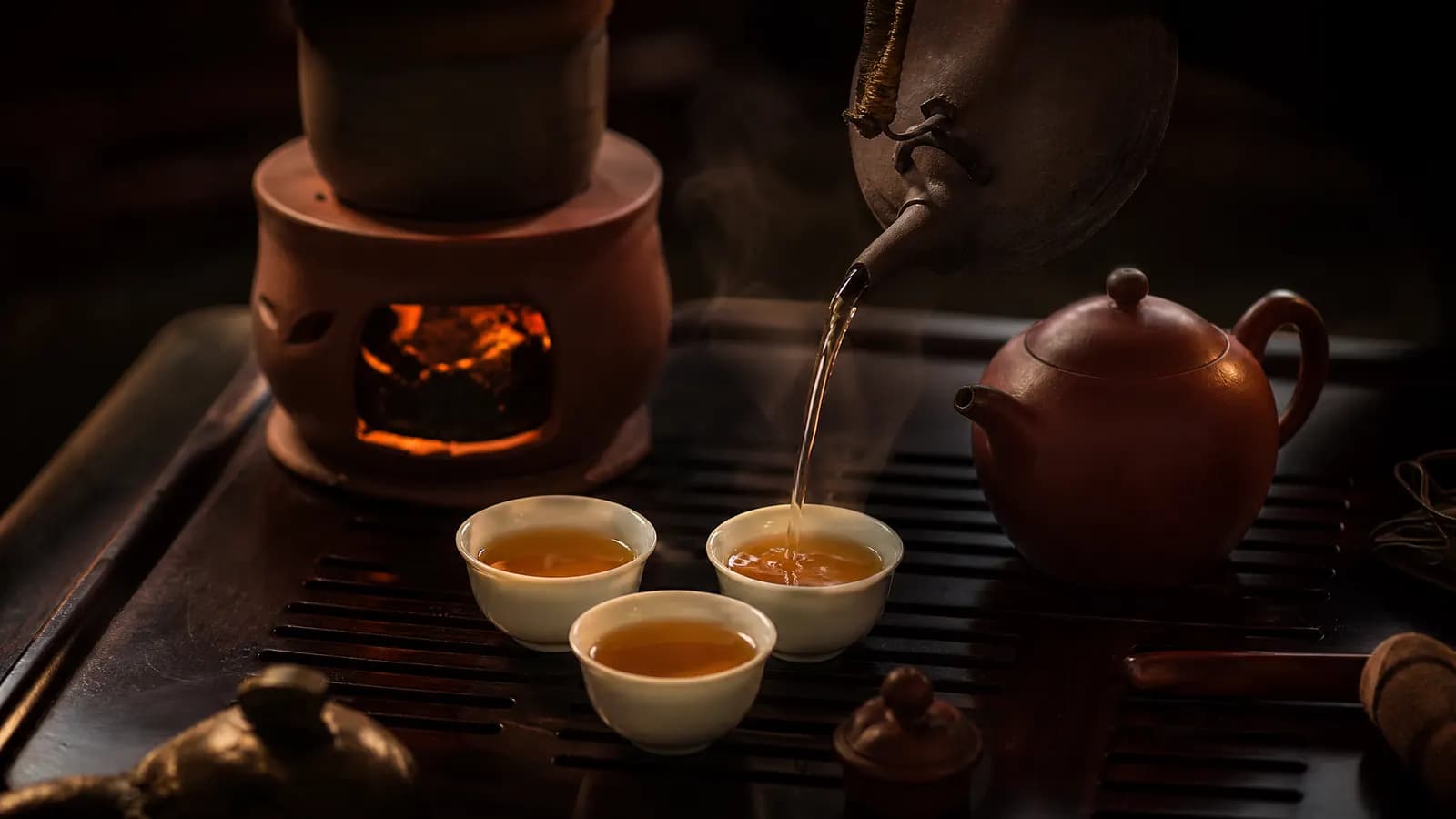
If you've watched anyone brew gongfu style, you've seen it: hot water goes over the leaves, and seconds later it's poured away. This is the rinse, and it's one of the most debated habits in tea.
What rinsing is
In Chinese it's usually called 洗茶 (xǐ chá, "washing the tea"), though many brewers prefer gentler names like 温润泡 (wēn rùn pào, "warming infusion") or 醒茶 (xǐng chá, "waking the tea"). The traditional Chaozhou gongfu sequence, as recorded in China's national intangible heritage listing, includes a rinsing step, 甘泉洗茶, before the first real infusion. (See What are the steps of Chaozhou gongfu tea?)
Why people rinse
Tea makers and vendors usually give these reasons:
- To open the leaf. Tightly rolled oolongs and compressed pu-erh take an infusion or two to unfurl, and a rinse starts that process so the first real cup isn't thin.
- To lift aroma. Warm, damp leaf releases its fragrance, and gongfu brewers often smell the leaves right after the rinse.
- To remove dust and small fragments, especially from aged or compressed teas.
Which teas to rinse, and which not to
| Usually rinsed | Usually not rinsed |
|---|---|
| Rolled oolongs (e.g. Tieguanyin) | Green tea |
| Wuyi rock oolong, Phoenix Dancong (many brewers) | White tea |
| Pu-erh, especially compressed or aged | Yellow tea |
| Dark tea (heicha) | Many black teas |
Brewers skip the rinse for delicate teas because the first infusion is often the best one, and rinsing washes away fine downy hairs and sweetness. Practice varies, though: plenty of experienced drinkers never rinse, and plenty rinse everything.
How long should a rinse be?
Short. Most brewers pour water over the leaf and decant within a few seconds; compressed or aged teas sometimes get a slightly longer rinse, or two. The pesticide study below tested rinses of 5 to 30 seconds. We haven't found an authoritative source that fixes an exact number, so treat "a few seconds" as the starting point and adjust to the tea.
Does rinsing remove pesticides?
Partly, depending on the chemical. The most useful research is a 2019 study in the Journal of Agricultural and Food Chemistry (Gao et al.):
- Rinses of 5 to 30 seconds carried between 0.2% and 24% of eight tested insecticides into the rinse water.
- The estimated pesticide risk from the following infusion dropped by 5% to 59%.
- The rinse also removed 0 to 11% of the tea's EGCG and caffeine.
Other research explains why results vary so much. Residues that dissolve poorly in water barely reach your cup at all, while highly water-soluble ones can move into the tea over several infusions, so a single rinse only removes part of them.
In lab tests, then, rinsing removes some water-soluble residue. It is not a substitute for buying tea from producers and sellers you trust.
Should you drink the rinse?
There's no harm in it if the tea is clean. Some people pour it over their teaware to warm it, or simply drink it. Many brewers just discard it.
Our view at D²
Rinse when it helps the tea. Rolled and roasted oolongs open up noticeably after a quick rinse, and you'll smell the difference. For a jasmine green tea, skip it and go straight to your first infusion.
Sources
- Gao W. et al., "Rinsing Tea before Brewing Decreases Pesticide Residues in Tea Infusion," J. Agric. Food Chem. 2019, 67(19):5384–5393: PubMed
- Study on pesticide transfer from tea leaves into infusions by water solubility: PMC
- China Intangible Cultural Heritage, 茶艺(潮州工夫茶艺), item Ⅹ-107: ihchina.cn