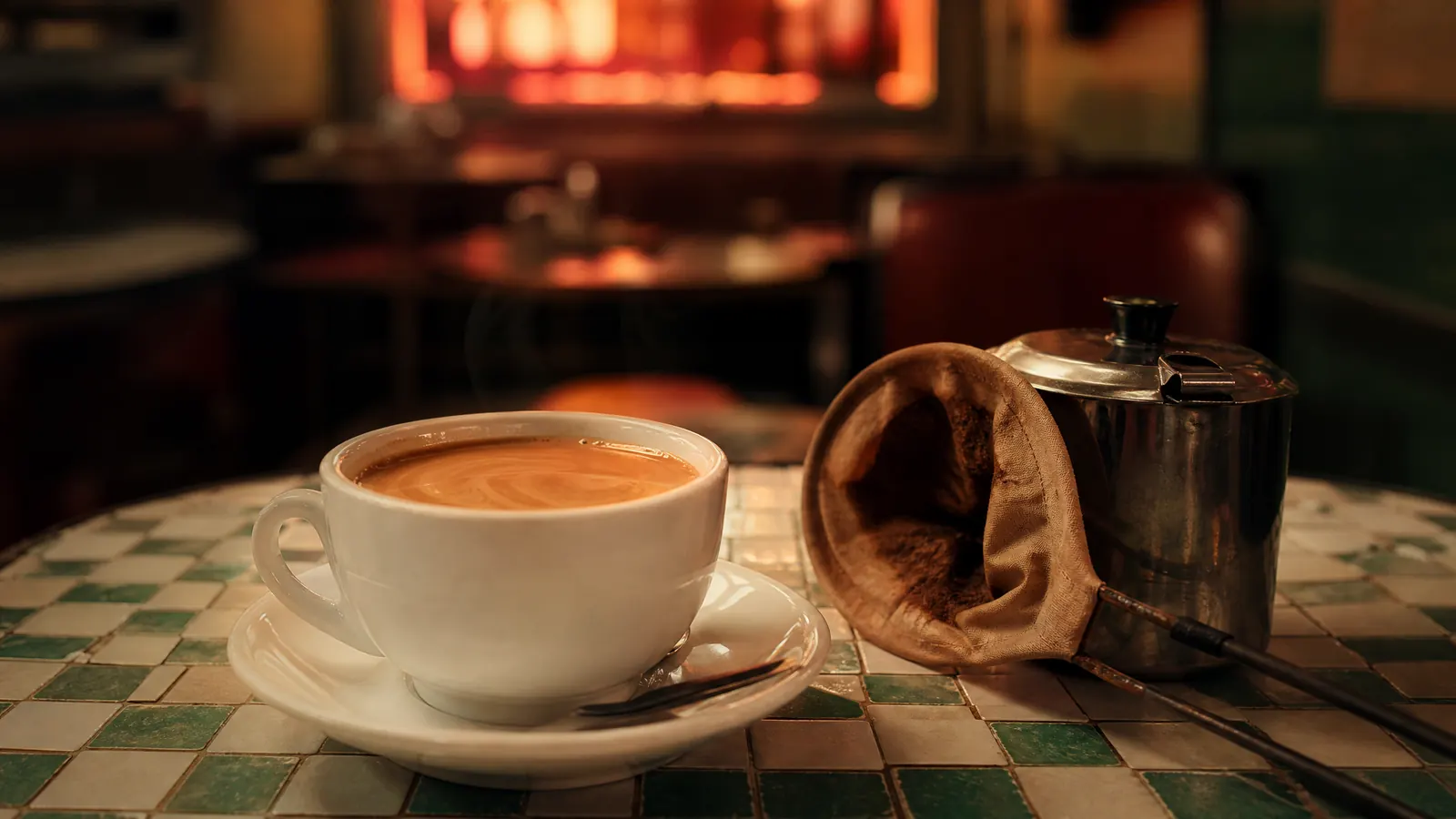
People often ask whether they have to choose: tea or coffee. In Hong Kong, the answer has been "both" for decades.
Yuanyang: Hong Kong's coffee milk tea
A cha chaan teng is one of the busy, no-frills Hong Kong diners that serve everything from macaroni soup to French toast. Walk into one and you'll find a drink called yuanyang (鴛鴦, yuen yeung in Cantonese), a mix of coffee and Hong Kong-style milk tea, served hot or iced.
The milk tea half is strong black tea, brewed hard and strained through a cloth filter until it's smooth and dark, then mixed with evaporated or condensed milk. The coffee half adds roasty bitterness and depth. Together they taste like neither one alone: richer than milk tea, gentler than coffee.
The ratio is often described as three parts coffee to seven parts milk tea, though every cha chaan teng has its own way. We noticed that number for obvious reasons.
Why it's called "mandarin ducks"
Yuanyang is the Chinese name for mandarin ducks, which are traditionally pictured in pairs and have long stood for couples. The male and female look strikingly different but always appear together, which suits two very different drinks sharing one cup. The same word is used for other "pairs" in Chinese cooking, such as a hot pot split into two broths.
Why coffee and tea work together
It sounds like a clash, but the two complement each other:
- Coffee brings body, roasty bitterness and chocolatey depth.
- Black tea brings tannic grip, a brisk, malty flavour and aroma.
- Milk softens both and ties them together.
Tea's astringency keeps coffee's heaviness in check, and coffee's body fills out tea's lighter structure. The same logic explains why a roasted oolong latte and a medium-roast coffee latte can taste surprisingly close.
Other drinks that bring the two together
Yuanyang isn't the only one. Around the world, people have found their own ways to mix coffee and tea:
- Dirty chai: a spiced chai latte with a shot of espresso added, common in North American cafés.
- Cham: in Malaysian kopitiams (coffee shops), a similar coffee-and-tea mix goes by cham ("mixed") and is often sweetened with condensed milk.
- Hojicha and coffee: roasted Japanese green tea and espresso are a newer pairing in specialty cafés, matching roast with roast.
Coffee and tea at D² Tea Lab
Our menu is built on tea, and that won't change. We're now testing coffee for guests who want it, and drinks like yuanyang show that the two can share a cup. Some of the most loved cups in Asian café culture use both.
Whether you're a tea person, a coffee person, or someone who's never had to choose, come and taste what we're working on.
Frequently asked questions
What does yuanyang taste like? Like a richer, deeper milk tea with a roasted, slightly bitter edge from the coffee. It's smoother than coffee and stronger than most milk teas.
What is the ratio in yuanyang? It's often described as three parts coffee to seven parts milk tea, but recipes vary from shop to shop.
Is yuanyang high in caffeine? It contains caffeine from both the coffee and the black tea. The total depends on how strong each part is brewed.
Where does yuanyang come from? Hong Kong, where it's a staple of cha chaan teng diners.