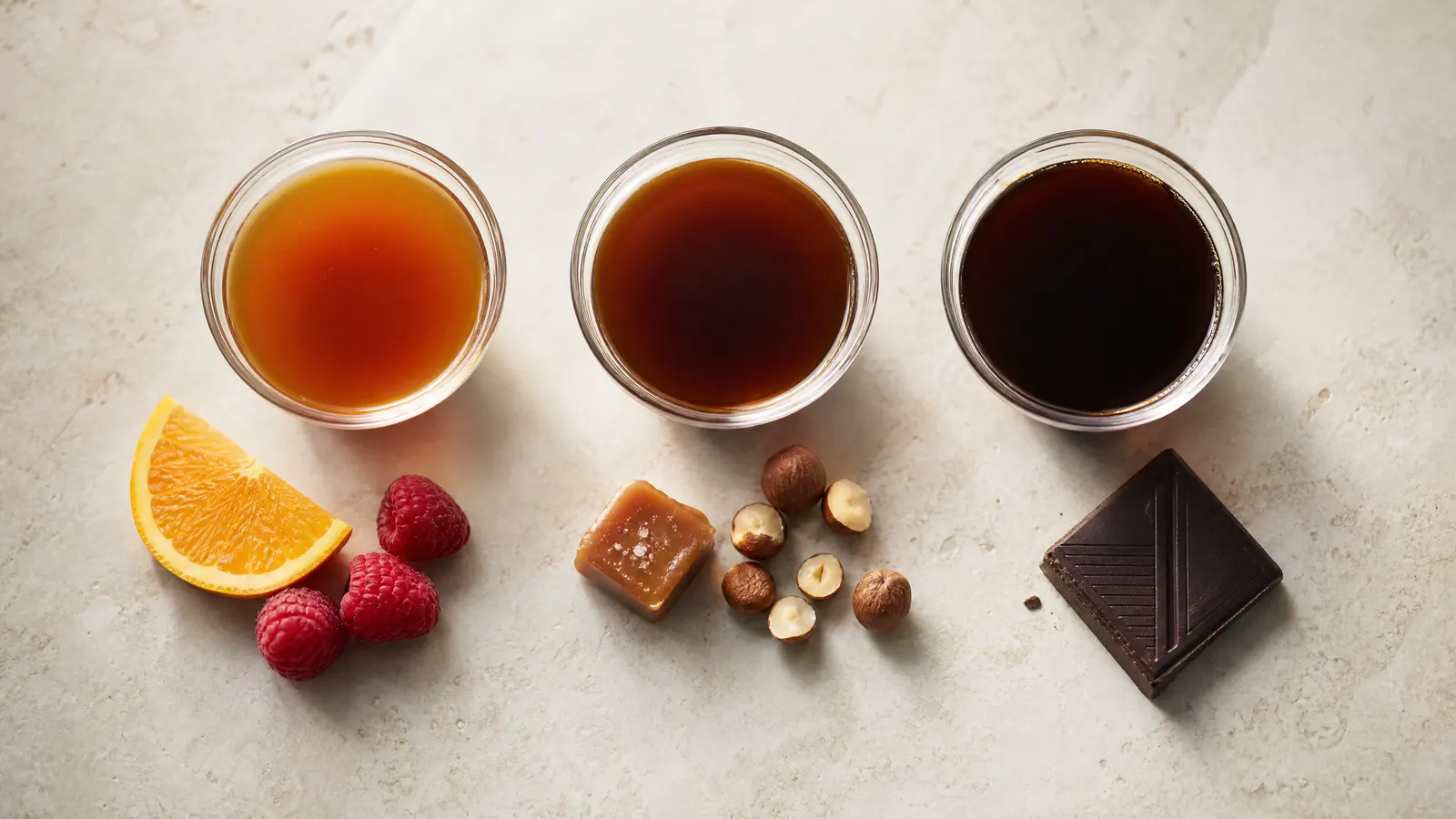
Most people know whether they like a coffee. Fewer can say why, which makes it hard to order something new or to explain to a barista what you're after.
Coffee tasters use a lot of words, but almost everything you notice in a cup comes down to four things. Once you can spot them, you can describe any coffee and find the kind you'll enjoy.
The four things you're tasting
1. Acidity: the brightness
Acidity is the lively, mouth-watering quality at the front of a sip. In coffee it isn't the same as sourness. Good acidity tastes like fruit, such as citrus, berries, green apple or stone fruit, and it's what makes a coffee feel fresh instead of flat.
If you like sparkling water with lemon, green apples or fruity white wine, you may enjoy higher-acidity coffees. If you find coffee "sour" or "sharp", look for lower acidity.
2. Body: the weight
Body is how heavy the coffee feels in your mouth. Light-bodied coffee feels closer to tea; full-bodied coffee feels rounder and thicker, almost syrupy. It's the difference between skim milk and whole milk.
Body matters a lot in milk drinks. A full-bodied coffee keeps its presence in a latte, while a light, delicate one can disappear.
3. Sweetness: the natural kind
Even black, unsweetened coffee can taste sweet. Roasting turns some of the bean's sugars into caramel and toasty compounds, and well-roasted coffee often tastes of brown sugar, honey, caramel or milk chocolate. Sweetness is usually what people mean when they call a coffee "smooth".
4. Bitterness: the backbone
Some bitterness is part of coffee, the way it's part of dark chocolate, and it gives the cup structure. Too much, often from very dark roasting or over-extraction, tastes harsh, ashy or burnt.
How roast changes those four
Roast level is the biggest single influence on what you taste.
| Light roast | Medium roast | Dark roast | |
|---|---|---|---|
| Acidity | Higher, fruity | Balanced | Low |
| Body | Lighter | Medium | Fuller |
| Typical flavours | Citrus, berry, floral, tea-like | Caramel, nuts, milk chocolate | Dark chocolate, roasted, smoky |
| Bitterness | Low | Moderate | Higher |
| With milk | Can taste thin | Versatile | Stands up well |
A common myth is that dark roast is "stronger". It tastes more intense, but its caffeine depends far more on how much coffee goes into the cup than on roast colour.
How origin plays in (a rough guide)
Where coffee grows shapes its flavour, though processing and roasting matter just as much. Tasters often describe these broad tendencies:
- East Africa (e.g. Ethiopia, Kenya): often bright, floral or berry-like.
- Central and South America (e.g. Colombia, Guatemala, Brazil): often balanced, with caramel, nuts, cocoa and gentle fruit.
- Indonesia (e.g. Sumatra): often heavy-bodied, earthy, spicy.
Treat these as starting points, not rules. Two farms in the same country can taste nothing alike.
Find your taste in three cups
The quickest way to learn is side by side. If you get the chance, taste:
- A light roast, black. Notice the acidity. Does it taste like fruit, or just sour?
- A medium roast, black. Notice the sweetness. Caramel? Nuts?
- Either one with milk. Which one still tastes like coffee?
You'll usually know within a few sips which direction you lean. One word, like "brighter", "rounder" or "less bitter", is all a barista needs.
How to order what you like
- "Something fruity and light": a light roast, black or as a pour-over.
- "Smooth, not bitter": a medium roast; ask for it with milk if you like it creamy.
- "Strong-tasting, for a latte": a fuller-bodied, darker roast holds up best in milk.
- "Iced, not watery": ask how the iced version is made. Good iced coffee is brewed for ice instead of just being poured over it.
Why a tea lab cares
Everything above applies to tea too. Our roasted oolong has body and roasty sweetness, and our jasmine green tea is all brightness and aroma. We spend our days matching those qualities to milk, sweetness and temperature, and now we're doing the same with coffee.
We're testing different coffees at D² Tea Lab right now, from brighter to rounder, so that guests with different tastes each have a cup that's right for them. If you know which of the four you care about most, tell us. It helps.
Frequently asked questions
What's the difference between acidity and sourness? Pleasant acidity tastes like fruit and makes coffee feel lively. Sourness is sharp and unpleasant, and in brewed coffee is often a sign of under-extraction (water passing through too fast or too cool).
Does dark roast have more caffeine? Not meaningfully. Caffeine changes little during roasting; how much coffee you use matters much more.
Which coffee is best with milk? Usually a medium-to-dark roast with fuller body, because its flavour carries through the milk.